
A Space Shuttle engineer walks into memory care.
Mark Fox spent his career making sure things worked when lives depended on it. He brought that same standard to the aging brain — and refused to put his name on anything until the evidence held up.
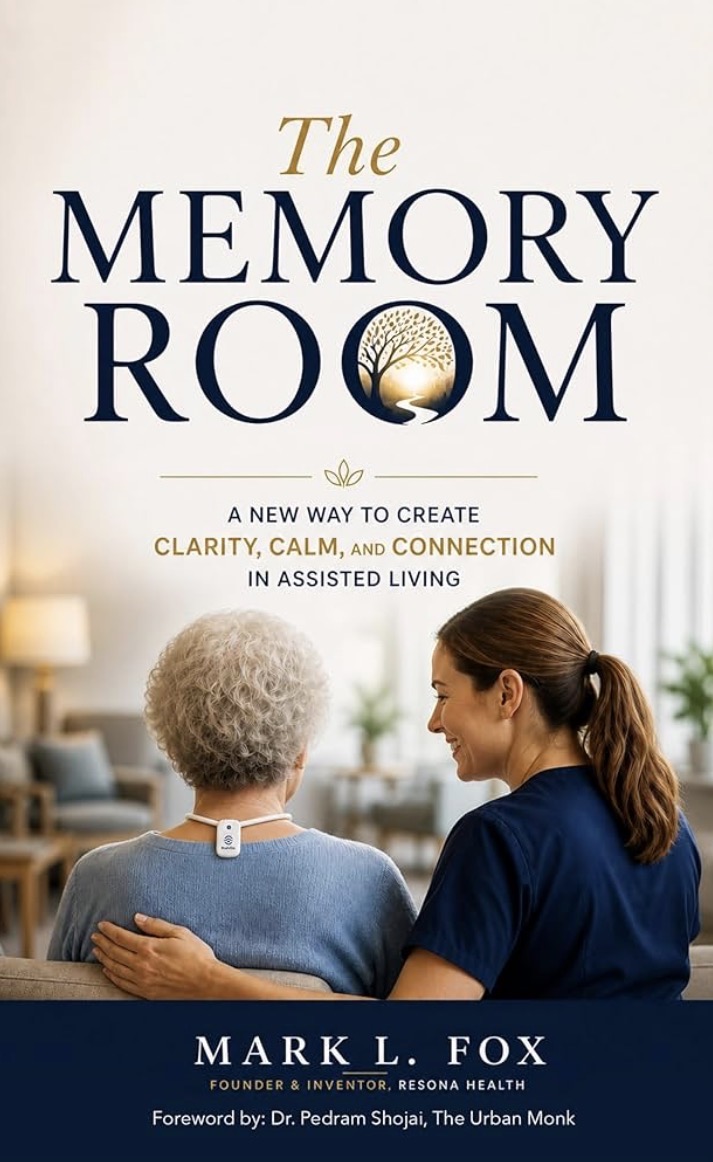
As a Chief Engineer on the Space Shuttle program, “that’s just how it is” was never an acceptable answer. So when he kept seeing good days and bad days in memory care that no one could explain to families, he went to the research — MIT’s decade of 40 Hz gamma work — and then ran a clinical study of his own. He will not tell you it’s a cure, because it isn’t. That honesty is exactly why the book is worth your time.
What’s inside the book
A New Way to Create Clarity, Calm, and Connection in Assisted Living — by Mark L. Fox · Founder & Inventor, Resona Health
The unlikely path from Space Shuttle engineering to the aging brain
Why an engineer’s standard of evidence matters in a field full of overclaims
The Phase 1 study he ran — and the device he wouldn’t name until it worked
A clear, honest statement of what this is, and what it is not
What this book will never claim.
It will not tell you this is a cure for Alzheimer’s or dementia — because it isn’t, and the author says so on the first pages. The losses cognitive decline causes are real. What the book argues is more modest, and more useful: that the people living with those losses have more good moments available to them than current care supports, and that safe, practical, evidence-backed tools now exist to help. You’re invited to evaluate the case yourself.
Voices from the Phase 1 study
“I stopped using my device for a week and realized how much it was actually helping.”
— Phase 1 Study Participant“I noticed better clarity and less stress.”
— Susan R., Study Participant“Helping my sleep every night without taking melatonin.”
— Flora W., Study ParticipantRead it. Then decide for yourself.
The full book, free — the science, the study, and the honest limits.
Run a memory-care facility? Ask about the 30–45 day BlueVibe pilot — baseline and end-of-pilot PROMIS assessments, with an outcome summary report for your team.