
What if the bad days aren’t the whole story?
We were taught the dementia brain simply wears out. MIT’s 40 Hz gamma research suggests something different: cognition fluctuates — and those fluctuations can be influenced, non-invasively.
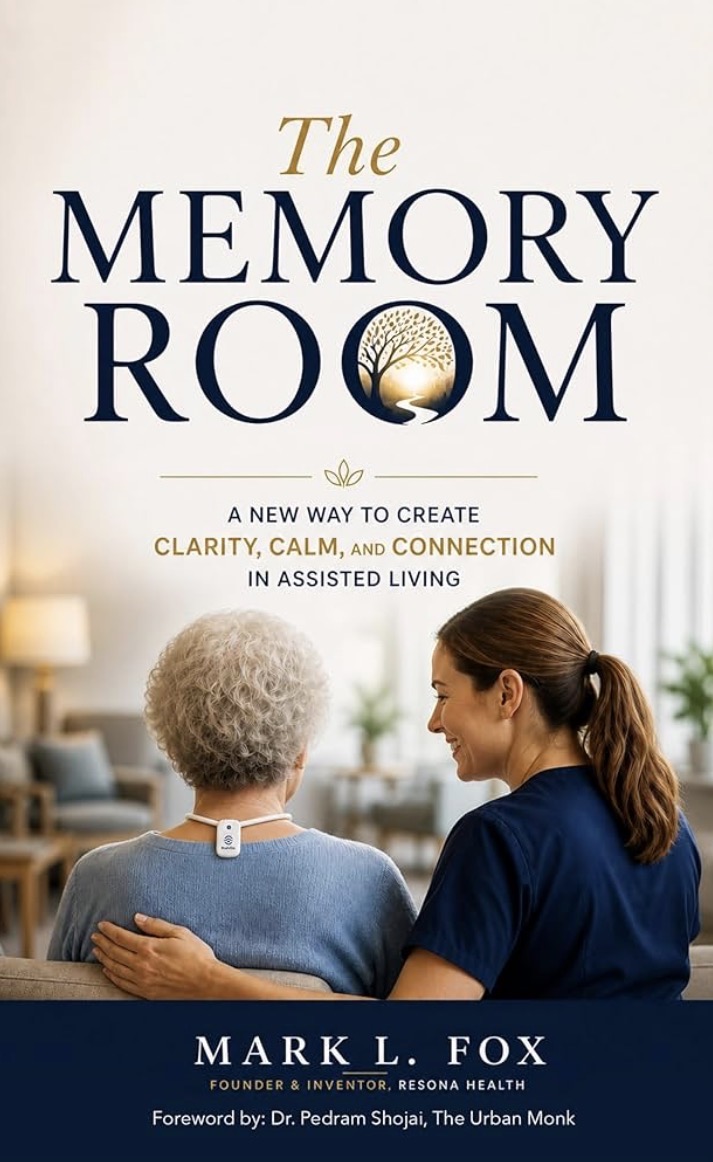
The brain isn’t just something that wears out. It’s a dynamic electrical system whose coordination changes day to day, hour to hour — and that’s exactly why your parent has good days and bad days. The part that surprised even the researchers: those fluctuations can be influenced at a specific frequency, in the right way, in the right place. This research appears in Nature and Cell. It is not fringe.
What’s inside the book
A New Way to Create Clarity, Calm, and Connection in Assisted Living — by Mark L. Fox · Founder & Inventor, Resona Health
Cognitive variability explained — why the same person can be present on Tuesday and far away on Friday
What happened when MIT scientists flickered a light forty times per second
The honest limits — what 40 Hz stimulation does and does not do
The full Phase 1 results and the science reference appendix, cited and checkable
What this book will never claim.
It will not tell you this is a cure for Alzheimer’s or dementia — because it isn’t, and the author says so on the first pages. The losses cognitive decline causes are real. What the book argues is more modest, and more useful: that the people living with those losses have more good moments available to them than current care supports, and that safe, practical, evidence-backed tools now exist to help. You’re invited to evaluate the case yourself.
Voices from the Phase 1 study
“…and even the next day. Also, my mood improved.”
— Michael H., Study Participant“I noticed better clarity and less stress.”
— Susan R., Study Participant“I stopped using my device for a week and realized how much it was actually helping.”
— Phase 1 Study ParticipantRead it. Then decide for yourself.
The full book, free — the science, the study, and the honest limits.
Run a memory-care facility? Ask about the 30–45 day BlueVibe pilot — baseline and end-of-pilot PROMIS assessments, with an outcome summary report for your team.